Our recommendation
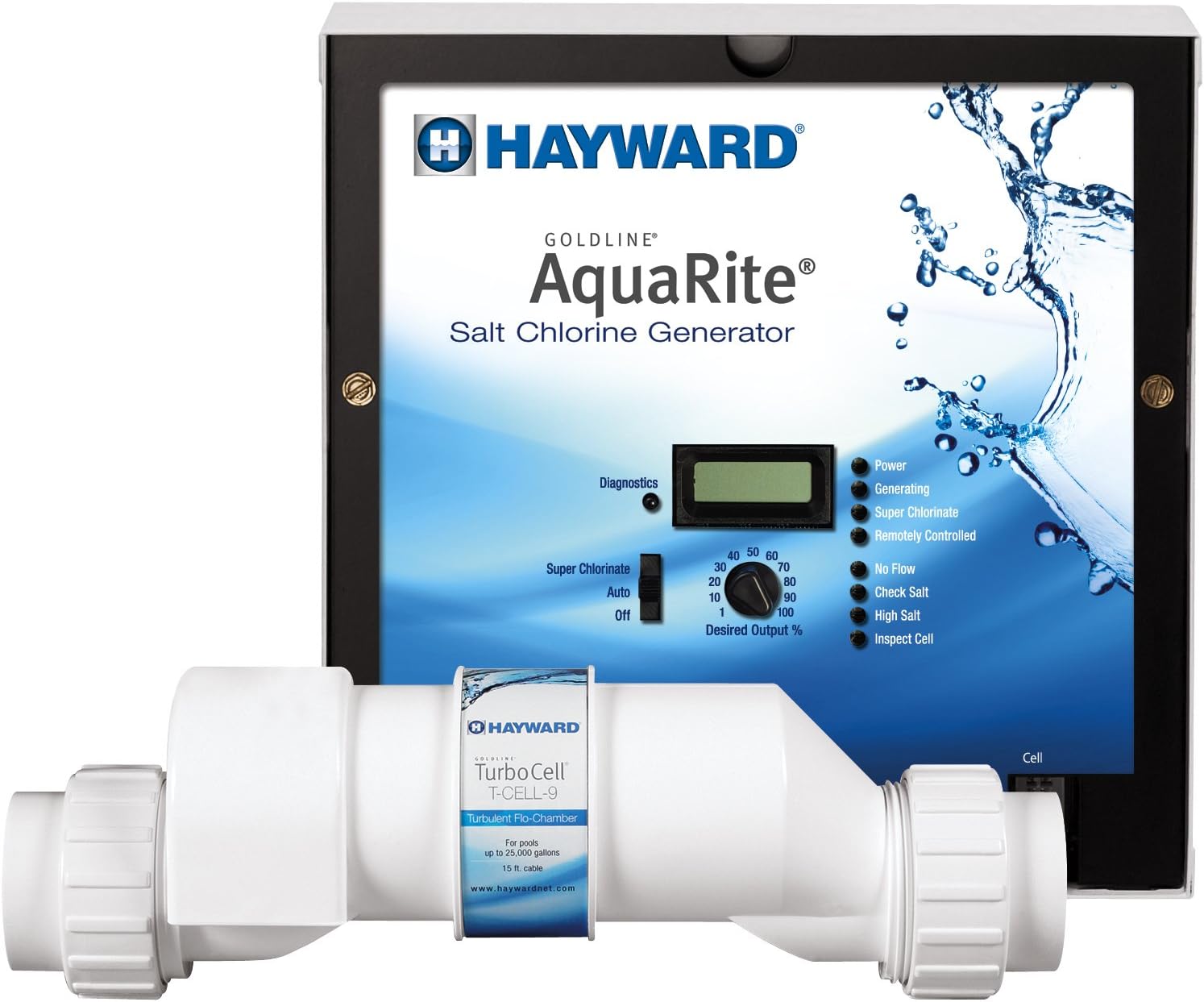
Hayward W3AQR9 AquaRite Salt Chlorination System for In-Ground Pools up to 25,000 Gallons is our top-scoring pick in Salt Water Pool System, at 9.8/10 (gallons capacity: 25000).
CircuPool RJ30+ Complete Salt Water Chlorination System for Swimming Pools | Titanium Cell & 7 Year Manufacturer Warranty | No DIY Install Penalty sits just 0.1 behind at 9.7, close enough that the deciding factor is usually which specification matters more to you (warranty: 7 Years).
Both scores are our editors’ assessment of published specifications, pricing and terms against the criteria in our rating methodology — they are not aggregated customer reviews.
The name is misleading, and it matters
A salt water pool is not a chlorine-free pool. A salt chlorine generator passes a low-voltage current through mildly salted water, and electrolysis converts dissolved salt into chlorine, which sanitises the pool exactly as dosed chlorine would. As that chlorine is consumed it reverts largely to salt, so the cycle continues.
What you are buying is a change in delivery method, not chemistry. People with genuine chlorine sensitivities are usually reacting to chloramines — the compounds formed when chlorine combines with sweat, oils and urine — and a salt system does not eliminate those. What it does deliver is a steadier, lower peak concentration of chlorine rather than the spikes of manual dosing, which is why the water often feels softer and smells less. Salinity sits far below seawater, typically a small fraction of it, so the water tastes only faintly salty.
Sizing the cell to the pool
Generators are rated by the volume of water they can sanitise and by chlorine output per day. The important rule is to oversize, not to match. A cell rated exactly to your pool volume must run near continuously in hot weather and under heavy bather load, which shortens its life and leaves no headroom. Choosing a unit rated for a pool substantially larger than yours means shorter run times, easier recovery after a party or a storm, and a longer service life.
Output also depends on water temperature — generators produce noticeably less in cool water and many shut off below a threshold — and on run time, since the cell only generates while the pump is running. If your pump runs a short daily cycle, the generator's rated daily output is not achievable.
Ongoing chemistry: three things that drift
Salt systems reduce handling of chlorine but do not remove water testing. Three parameters need attention.
- pH rises. Electrolysis and the aeration it causes push pH upward continuously, so salt pools typically need regular acid addition. This is the single most common surprise for new owners.
- Stabiliser matters more, not less. Cyanuric acid protects chlorine from sunlight. Because a generator produces chlorine steadily but slowly, without adequate stabiliser much of the output is destroyed by UV before it works. Too much, however, makes chlorine sluggish.
- Salt level should sit within the manufacturer's stated range. Salt is lost to splash-out, backwashing and rain overflow, not to sanitising. Too little reduces output and can damage the cell; too much accelerates corrosion.
Cell maintenance and replacement cost
The cell is a consumable, and this is the honest financial centre of the decision. Calcium scale builds on the plates, particularly in hard water or at high pH, and reduces output. Many units reverse polarity periodically to shed scale, but cells still need periodic inspection and sometimes acid cleaning — done gently, since aggressive or frequent acid washing removes the coating and shortens life.
Cells have a finite lifespan, generally measured in a few thousand operating hours or several seasons, and replacement is a significant expense — often a large fraction of the original system price. Any comparison against tablet or liquid chlorine should include amortised cell replacement, not just salt and electricity. Over a full ownership cycle the two approaches are often closer in cost than marketing suggests; the reliable gains are convenience, no chlorine storage, and more stable water.
Corrosion: the risk to plan around
Salt water is more aggressive to metals and some stone than fresh water. Points of concern are heaters with copper or cupronickel components, ladders, rails, light rings, screws and fasteners, and natural stone or unsealed masonry coping where splash-out evaporates and concentrates salt. Reasonable precautions are a sacrificial zinc anode in the plumbing or skimmer, a heater specified as salt-compatible, rinsing decking and coping, and keeping pH and calcium hardness in range, since corrosion accelerates when chemistry drifts. Some heater and equipment warranties have terms relating to salt systems, so it is worth checking before installation.
Retrofitting and shutdown
Converting an existing pool means installing the cell and a flow sensor in the return plumbing after the filter and heater, wiring the control unit, and adding salt. It is a realistic project for a competent DIY owner, though electrical work and bonding should meet local code and often requires a licensed electrician. For winter closing in cold climates, the cell is typically removed, cleaned and stored, and the plumbing drained; leaving a cell in freezing water is a common way to destroy one.
Sizing rules, salt ranges, cleaning procedures and warranty terms vary by manufacturer and model. Follow the specific manual for your unit and confirm current requirements with the supplier before purchase or installation.